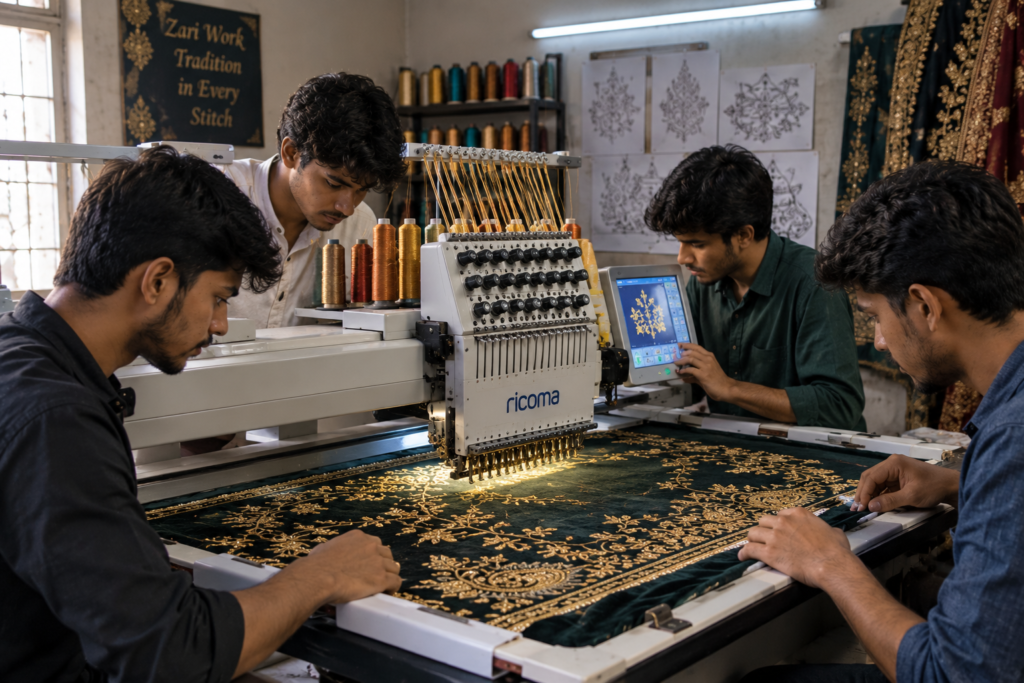
At the heart of our workshop, four dedicated artisans collaborate to bring intricate designs to life. While the soul of the work remains deeply rooted in traditional care, we utilize advanced, multi-needle embroidery technology to ensure pristine, clean detailing. One artisan carefully calibrates the digital design panel to match our paper sketches, while the others guide the rich dark green velvet and monitor the complex threading of gold spools. This perfect balance of human oversight and state-of-the-art machine precision guarantees flawless symmetry and a refined finish, ensuring that every floral vine and golden arch is crafted to perfection while keeping the Zari work tradition in every stitch.
At the heart of our workshop, four dedicated artisans collaborate to bring intricate designs to life. While the soul of the work remains deeply rooted in traditional care, we utilize advanced, multi-needle embroidery technology to ensure pristine, clean detailing. One artisan carefully calibrates the digital design panel to match our paper sketches, while the others guide the rich dark green velvet and monitor the complex threading of gold spools. This perfect balance of human oversight and state-of-the-art machine precision guarantees flawless symmetry and a refined finish, ensuring that every floral vine and golden arch is crafted to perfection while keeping the Zari work tradition in every stitch.

sarah jerkin
founder of elevets labs
I was a bit hesitant to order a handmade dress all the way to South Africa, but the Anarkali gown I received is simply stunning. The zardozi embroidery is so neat, and the fitting is absolutely perfect. The international delivery was surprisingly fast and smooth. Truly a premium experience!"
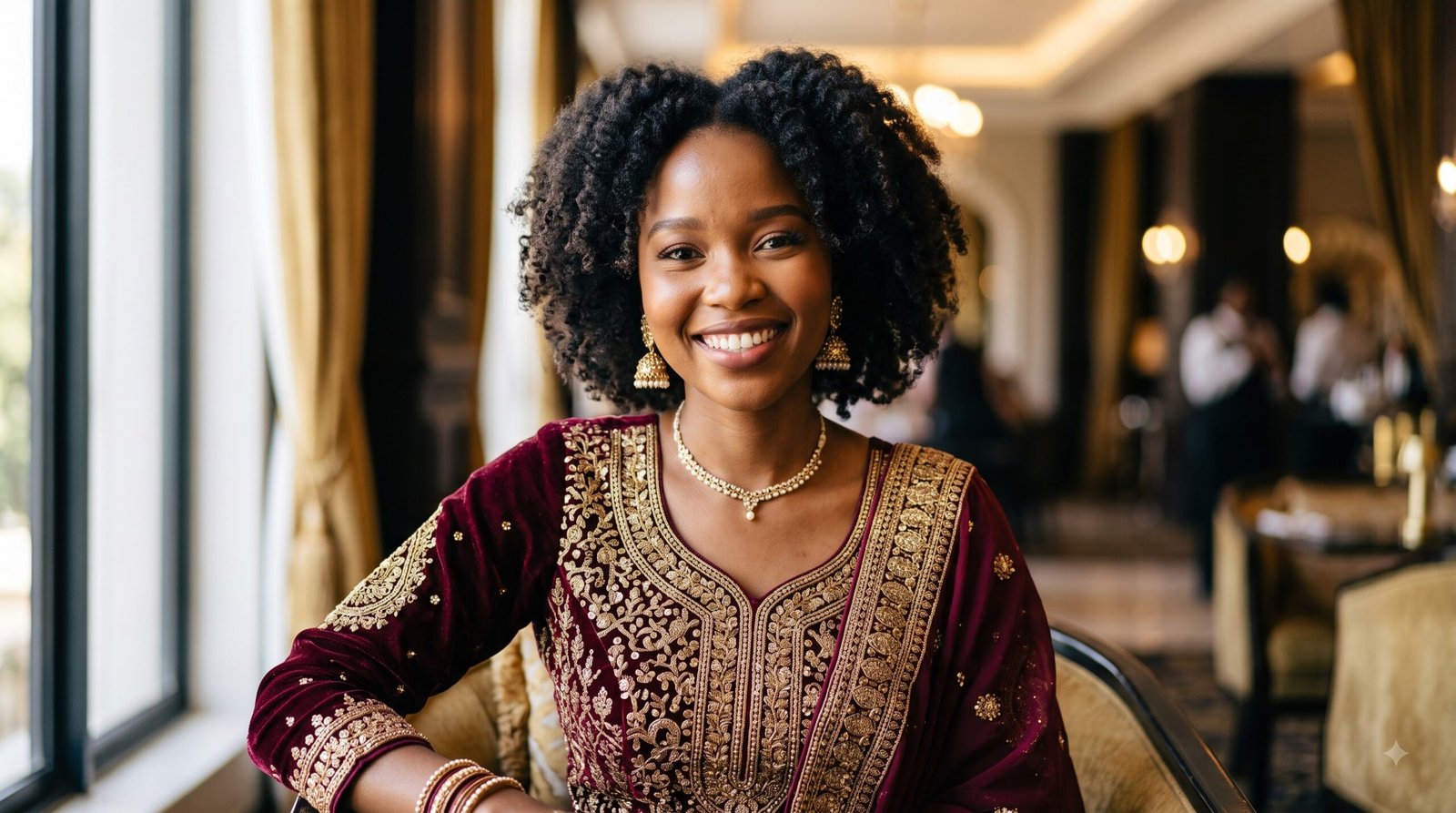
– Zanele M., South Africa